Gunite vs. Shotcrete — What's the Real Difference?
People use these two words like they mean the same thing, and technically they're close cousins, but the mix isn't built the same way. Shotcrete is wet concrete — already mixed — that gets shot out of the hose. Gunite starts dry and only meets water right at the nozzle, which means our crew controls exactly how much water goes into the mix in real time instead of hoping a batch mixed an hour ago is still workable. That control is why gunite has been the standard for custom pool shells for decades: it lets us build up the shell in layers and hand-shape it as we go, rather than committing to a pour all at once.
How We Build a Gunite Pool
Each project is different, but a typical custom gunite pool installation includes the following stages.
We begin by discussing how you want to use the pool, which features are most important, and how the pool should fit into the overall backyard.
The property is reviewed for available space, access, grading, drainage, sunlight, utilities, existing landscaping, and the relationship between the pool, home, and surrounding outdoor areas.
Looking at the entire yard before finalizing the pool helps prevent the finished space from feeling disconnected or crowded.
The pool is designed around the property and your preferences. During this stage, we plan the pool’s:
- Shape
- Length and width
- Shallow and deep areas
- Entry steps
- Tanning ledges
- Benches
- Integrated spa
- Water features
- Equipment location
- Coping
- Patio
- Walkways
- Outdoor entertaining areas
Inground pool projects generally require local building, zoning, electrical, safety, and related approvals. Setback, barrier, fencing, inspection, and documentation requirements can vary by municipality and property.
The required approvals and site preparations are addressed before excavation begins.
The approved pool design is marked on the property so the location, shape, and dimensions can be reviewed before excavation.
The pool area is then excavated according to the design. Property access, soil conditions, ledge, groundwater, grading, and the amount of material that must be removed can all affect this stage.
A reinforced steel framework is installed throughout the pool structure, including the floor, walls, steps, benches, ledges, and other structural features.
The framework helps establish the pool’s shape and reinforces the concrete shell.
Pool plumbing is installed during this stage. Lines are positioned for the pool’s skimmers, drains, returns, water features, spa, and selected equipment before the shell is applied.
This is one of the most important stages of construction because much of this work will no longer be visible once the pool is complete.
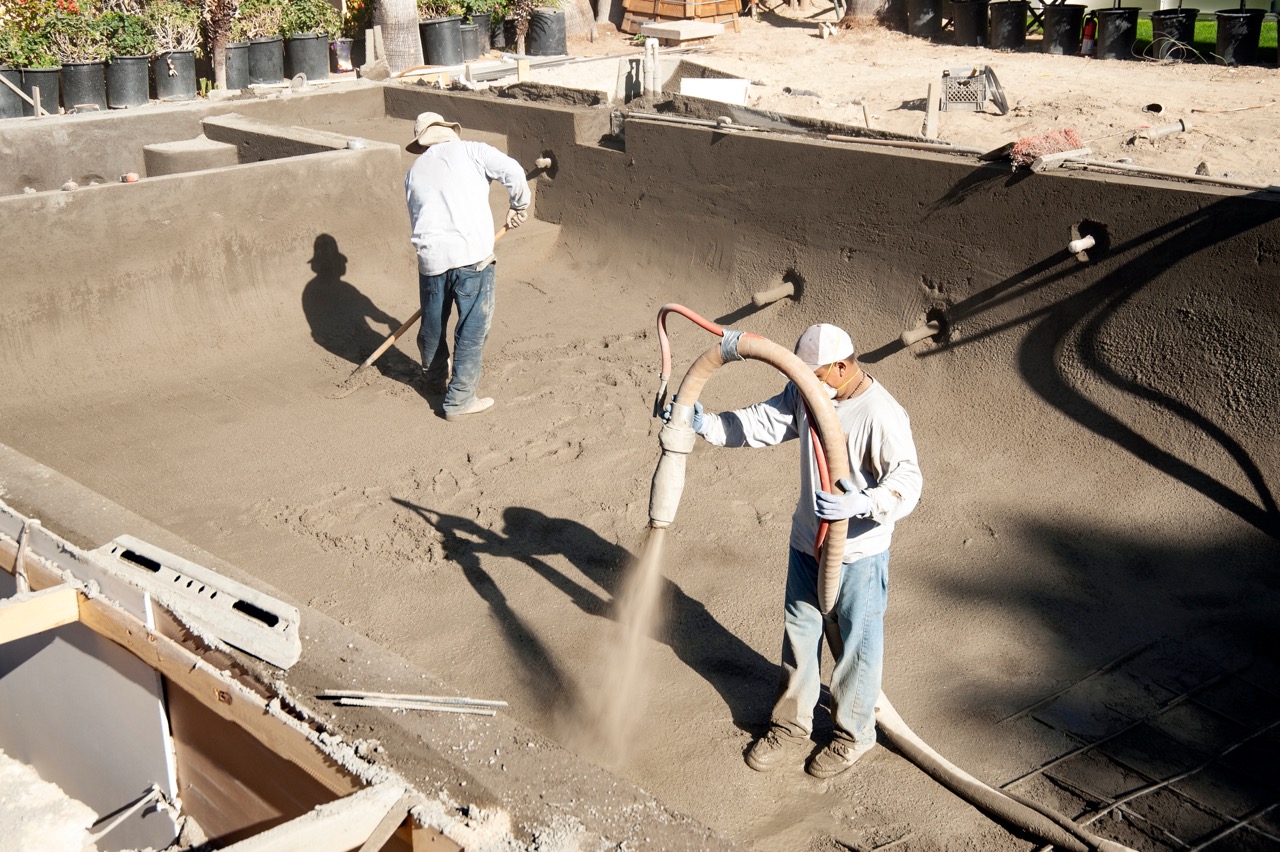
The gunite mixture is pneumatically applied over the reinforced steel framework.
The material is built up and shaped to form the pool floor, walls, steps, benches, tanning ledges, spa, and other structural features included in the design.
This on-site application is what gives gunite pools their design flexibility. The pool shell is constructed specifically for the property instead of being manufactured in a predetermined mold.
After the gunite has been applied, the shell must be allowed to cure properly before the remaining finishes are installed.
Curing is an essential part of the construction process and should not be rushed. Weather, temperature, project specifications, and the materials used can affect the curing requirements and construction schedule.
The pool’s electrical, bonding, lighting, controls, pump, filter, heater, sanitization equipment, and other selected systems are installed and connected as the project progresses.
Equipment is selected according to the pool’s size, features, plumbing, desired functionality, and automation requirements.
Waterline tile is installed along the inside perimeter of the pool.
Coping is installed around the top edge of the pool shell, creating a finished transition between the pool and the surrounding patio.
Coping options may include materials that coordinate with the patio, home, landscape, and overall pool design.
The selected interior finish is applied to create the final surface of the pool. Finish options can affect the pool’s:
- Water Color
- Texture
- Appearance
- Reflectivity
- Overall Style
After the finish is applied, the pool is filled according to the appropriate startup procedure.
The pool patio and surrounding outdoor features are completed to create a connected backyard environment.
Depending on the project, the surrounding space may include:
- Paver patios
- Natural stone
- Concrete surfaces
- Walkways
- Steps
- Retaining walls
- Fire features
- Outdoor kitchens
- Seating areas
- Landscape beds
- Lighting
- Drainage improvements
Planning the pool and patio together creates a more functional layout and a more cohesive finished design.
Explore Our Patio and Hardscaping Services
Once the pool is filled, the water is balanced and the pool equipment is started.
We review the completed pool and explain the operation of the pump, filter, heater, controls, lighting, sanitization equipment, and other installed features.
The homeowner walkthrough helps you understand how to operate and care for your new pool before regular use begins.
Request a Gunite Pool ConsultationHow Long Does It Take to Install a Gunite Pool?
A gunite pool is constructed through multiple stages rather than delivered as a completed shell. The overall project includes design, local approvals, site preparation, excavation, steel, plumbing, gunite application, curing, tile, coping, interior finishing, equipment installation, and patio construction.
The total timeline depends on:
- Pool size and complexity
- Property access
- Soil and groundwater conditions
- Ledge or rock
- Local permitting and inspections
- Weather
- Material availability
- Custom features
- Patio size and materials
- Retaining walls
- Landscaping and outdoor living work
- Changes made after construction begins
Starting the planning process early provides more time for design decisions, product selections, approvals, scheduling, and construction.
During your consultation, AMD Pool & Patios can explain the expected schedule based on your proposed pool and property.
Construction Process FAQs
Gunite and shotcrete are both pneumatically applied concrete materials used to construct reinforced pool shells.
Gunite begins as a dry cement and sand mixture, with water introduced at the application nozzle. Shotcrete is mixed with water before it enters the application hose. The primary difference is when water is added to the mixture.
Gunite pool construction involves design, permitting, excavation, steel, plumbing, shell application, curing, tile, coping, equipment, interior finishing, and patio work.
The schedule depends on the pool design, property access, site conditions, municipal approvals, inspections, weather, material availability, and the amount of surrounding outdoor work.
AMD Pool & Patios can provide a projected schedule after reviewing your property and proposed pool.
Inground swimming pools generally require local building, zoning, electrical, barrier, and safety approvals.
The requirements vary by municipality and property. Setbacks, fencing, gates, alarms, inspections, drainage, and documentation may all need to be addressed before the pool can be completed.
Message Us Today
Whether you have questions about your project, budget, or our services.
Simply fill out the form and we'll be in touch.
Please fill out this form or call (401) 525-6869 to receive a quote.